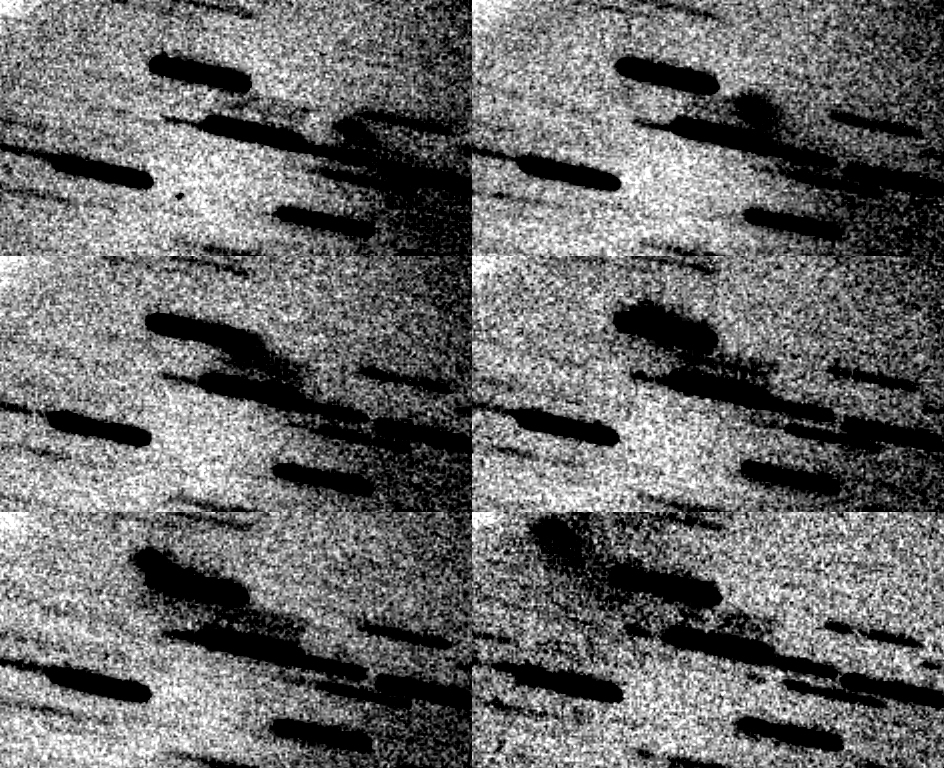
Brighter new component AP of Comet 73P about 90 arc minutes East of the rest of the components C, AF, and AR. Stacks of 40 thirty second long exposures added with a motion vector of 4.25 "/min at PA 79 degrees. Object moves in front of a group of stars near mid-frame, but can be clearly seen. Object first noted by Eric Christensen on MPML list.
Image uploaded on: 2006-04-27 02:41:01
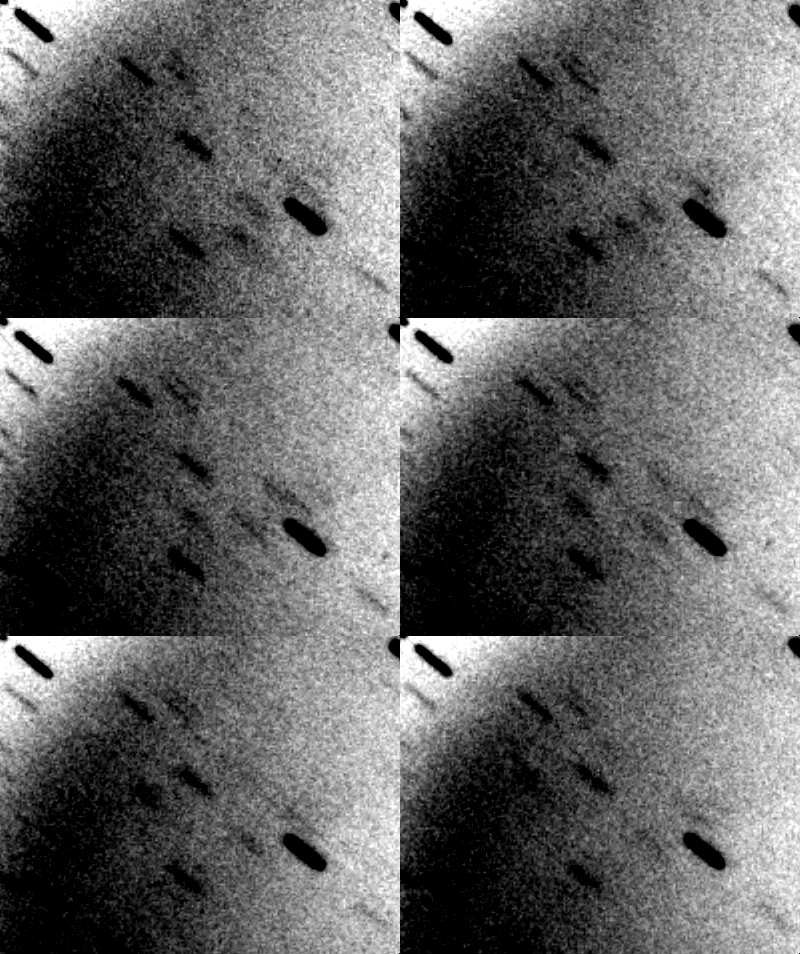
Animation of component P and nearby component AO of Comet 73P from 4/19 UT. Objects are between 19.5 and 20.5 nuclear magnitude. Each image is a stack of 40 different 30 second frames stacked with the motion vector expected from component P, which is about 2 arcsec per minute at a position angle of 50 degrees. There is a background flat field problem that causes the dark upper left hand corner of the image. This component of the comet is about a quarter of a degree away at PA 106 degrees from the much brighter component B, which is now visible in good binoculars from dark sites.
Image uploaded on: 2006-04-27 02:39:07
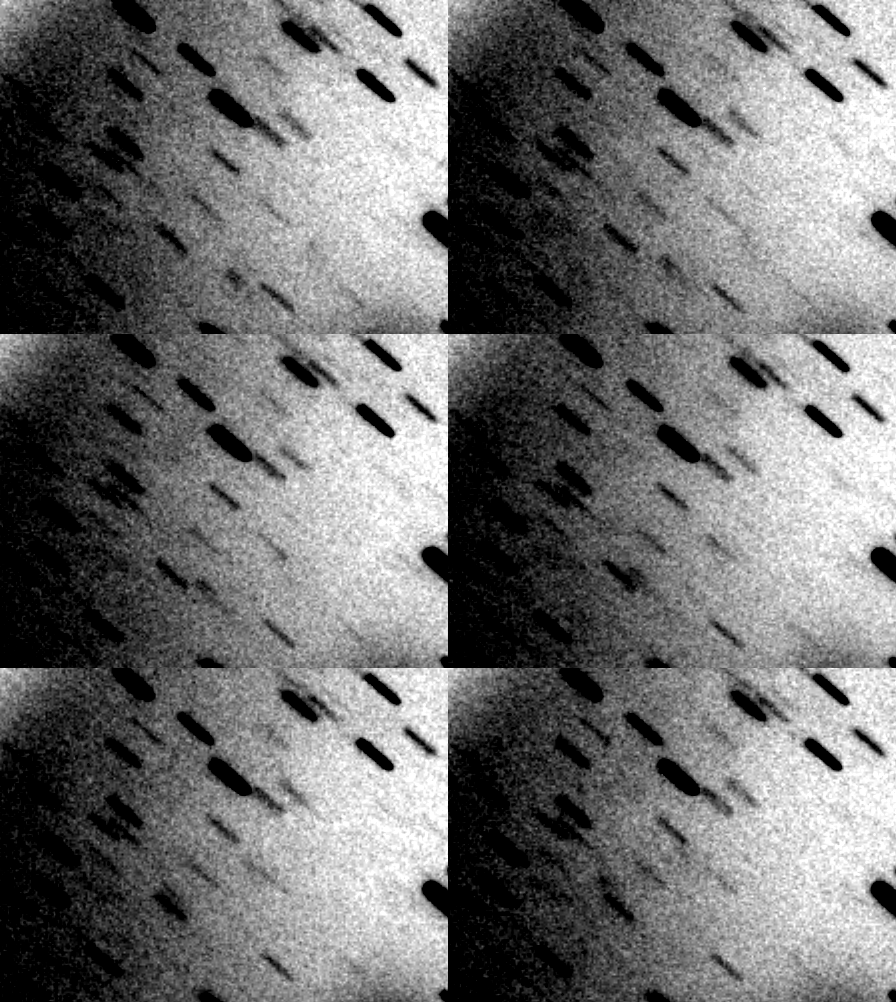
Animation of component P and nearby component AO of Comet 73P from 4/18 UT. Objects are between 19.5 and 20.5 nuclear magnitude. Each image is a stack of 40 different 30 second frames stacked with the motion vector expected from component P, which is about 2 arcsec per minute at a position angle of 50 degrees. There is a background flat field problem that causes the dark upper left hand corner of the image. This component of the comet is about a quarter of a degree away at PA 106 degrees from the much brighter component B, which is now visible in good binoculars from dark sites.
Image uploaded on: 2006-04-27 02:37:31
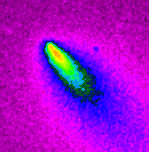
Single 30 sec exposure from 4/20 UT showing fragment AQ separating from fragment B of Comet 73P. Image is log scaled and used a rainbow color table.
Image uploaded on: 2006-04-26 02:45:21
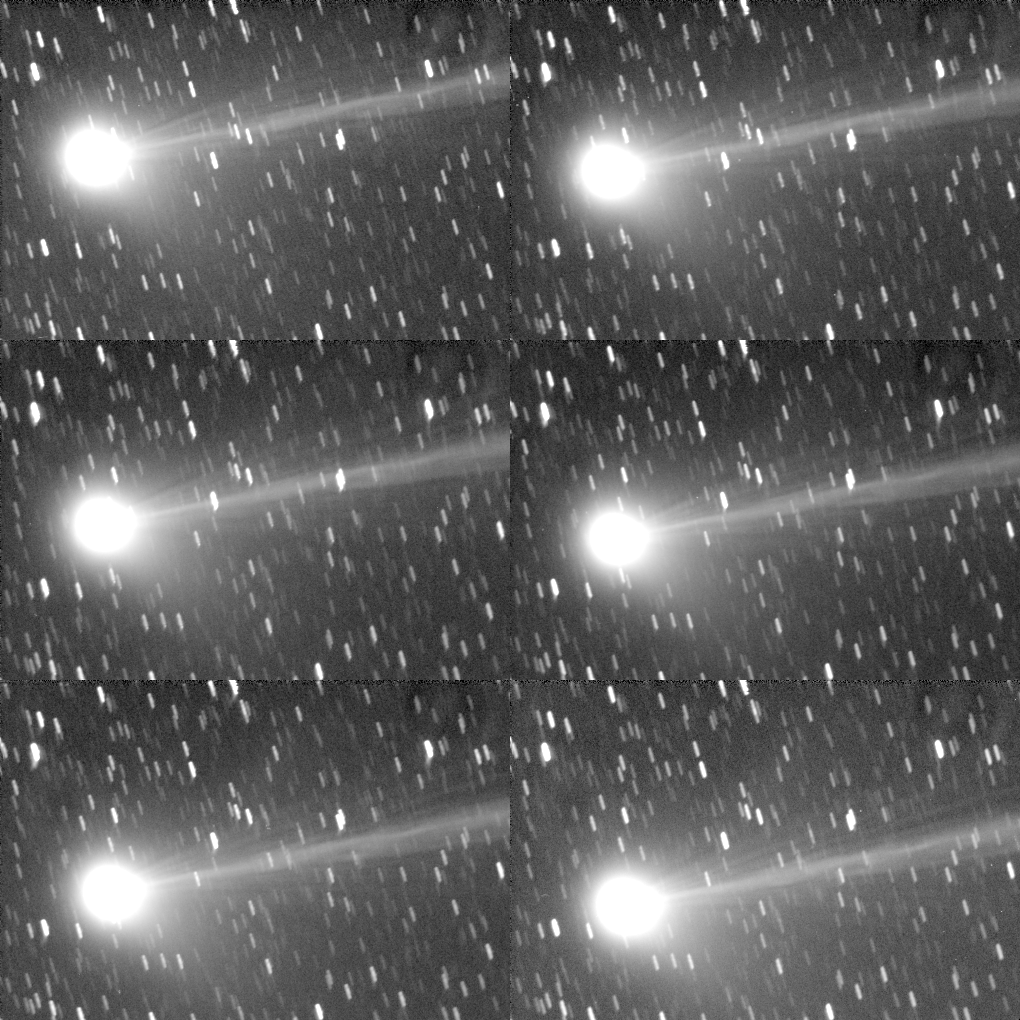
Comet Pojmanski 2006 A1, taken March 5,2006 between 4:30 and 5:15 AM. Each frame is a stck of ten 30 second images, stacked with the comet's vector of motion so that the comet is still and the stars steak out. Comet is visible in binoculars in the morning sky in March.
Image uploaded on: 2006-03-09 23:24:16
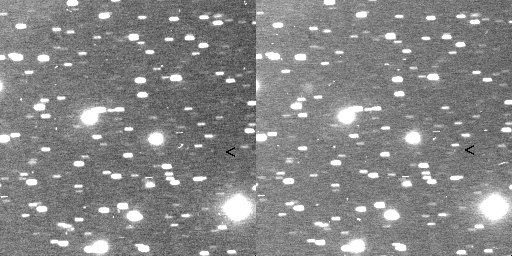
One of our recent discoveries, 2006 BW139, which was first observed by Byron Greene on Jan 30.
Image uploaded on: 2006-03-09 23:19:59
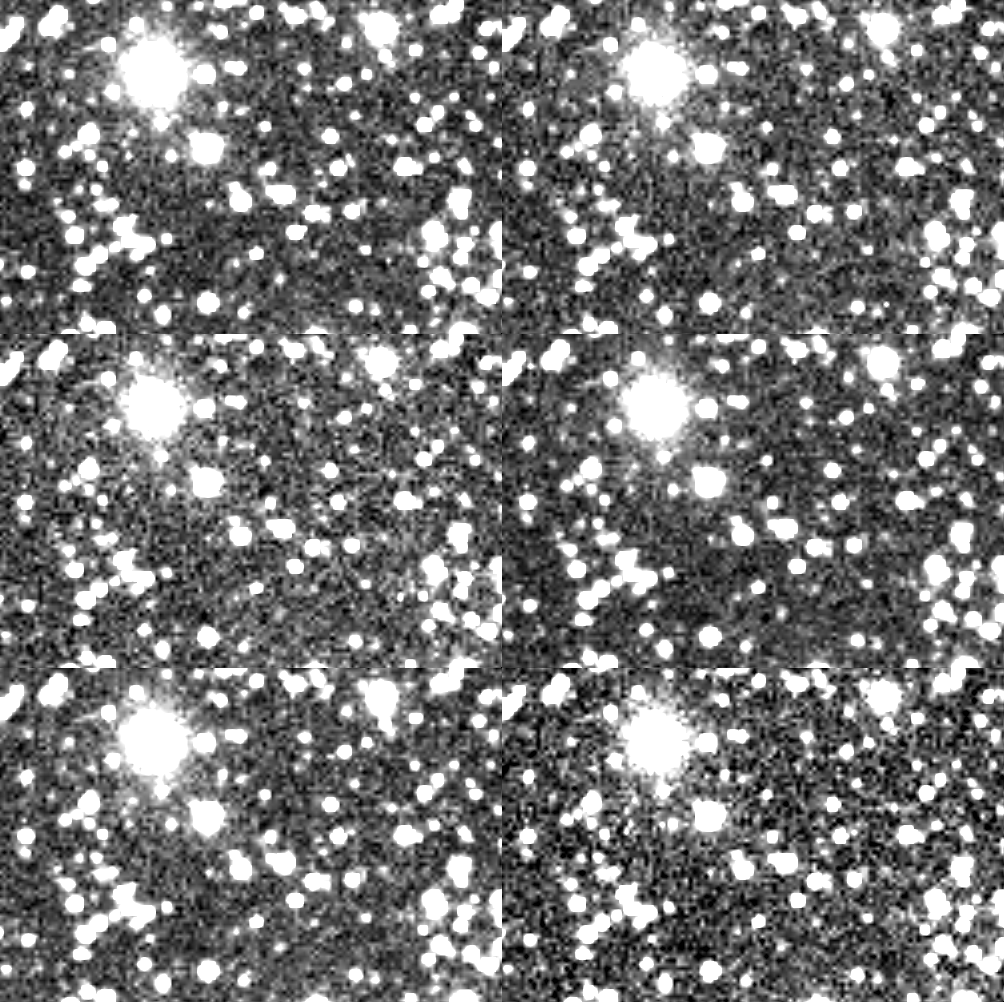
Animation of GRB051109a afterglow fading. Frames are at about 30 minute intervals from 2:45 UT until 5:45 UT. FOV is about 4x6 arc min. Afterglow fades from 18.7 to dimmer than 20th magnitude. Images by Dr. D. T. Durig.
Image uploaded on: 2005-11-09 15:09:31
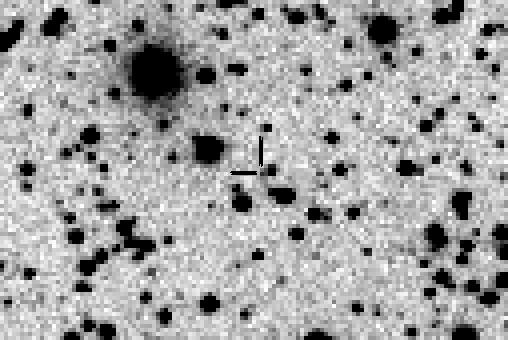
GRB051109 at 2:50:46 UT on 2005 11 09 observed at about 18.7-19th mag. FOV is about 4 by 6 arc min. Median addition of 4 consecutive 300 second exposures. GRB afterglow is located very near a 17.8 mag star located at 22 01 14.6 RA +40 49 25 DEC. Image by Dr. D. T. Durig of the Cordell-Lorenz Observatory of The University of the South.
Image uploaded on: 2005-11-08 21:21:08
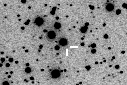
GRB051028 afterglow at about 12 hours post HETE detection. Sum of 12 x 300 sec for a total of one hour exposure. Afterglow is about 20.6 to 21.0 mag. Image by D. T. Durig and E. B. Caton.
Image uploaded on: 2005-10-29 04:48:22
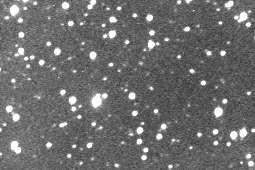
2 hour exposure ( 24 x 300 sec ) showing the afterglow of Gamma Ray Burst 050922C. It faded from 19.1 mag to 20.1 mag during these two hours of exposure.
Image uploaded on: 2005-09-22 23:36:57