Large Image Upload Working!
3MB+ File
30FPS
Image uploaded on: 2005-09-21 18:41:36
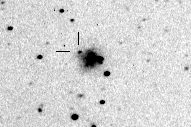
SN 2005dz
6x300 sec
6.7x4.5 arc min
17.9 mag
Image uploaded on: 2005-09-12 07:02:04
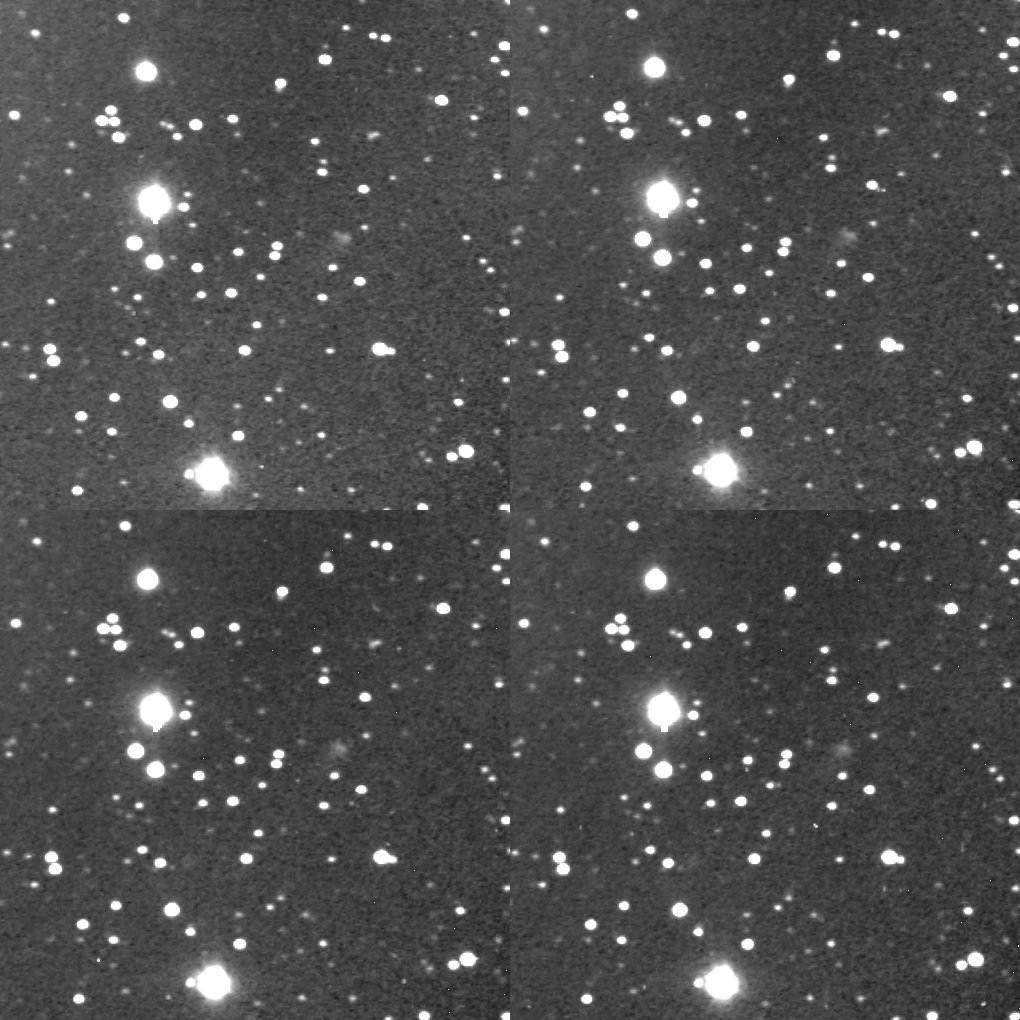
Interesting object from 9/4 UT. What is it ??? Where is it now ?????????????
Image uploaded on: 2005-09-06 02:04:35
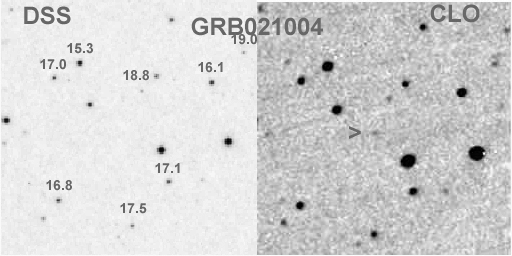
GRB021004
Image uploaded on: 2005-06-29 16:15:32
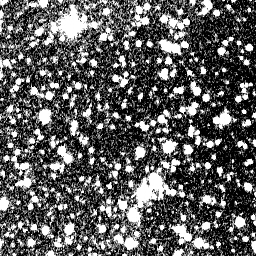
GRB050525- sum of 75 individual 120 sec images centered near 8 13 UT 0n May 25, 2005, approximately 5 hr 20 min after burst detection and between 18 and 19th magnitude. Field of View is 12x12 arc min.
Image uploaded on: 2005-06-15 15:05:50
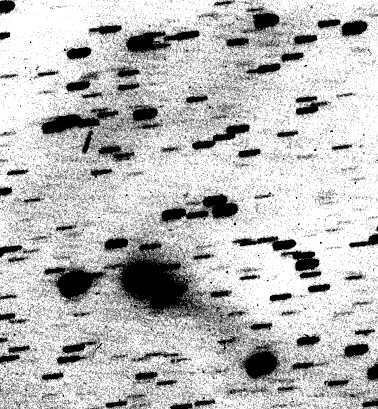
This is an image of Comet 32P Comas Sola taken by Mary Alice Mathison (C07) on November 9th, 2004. Twelve individual five minute exposures were added together with the motion vector of the comet so that the stars are streaks and the moving comet is not smeared out by its motion. The odd streak around 11 o'clock from the comet is a Near Earth Asteroid, 2004 PU103. It's motion was different from the comet so it was streaked in a different direction than the stars. The tiny dot above the cluster of 5 streaked stars above the comet is one of our discoveries, 2004 VJ65. It's motion was very similar to the comet so it appears as a dot. Another of our asteroid discoveries, 2004 VR65, is also in the frame but much dimmer and not moving nearly the same as the comet so it can be detected in this view. Four more new asteroids were located just outside the frame as we did follow-up observations on these two discoveries on other nights later in the week: 2004 VS65, 2004 VH75, 2004 VP74 and 2004 VD78.
Image uploaded on: 2005-06-15 15:05:47
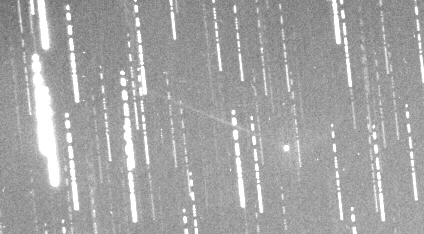
Comet 2004 TU12- The Asteroid that became a Comet for three days- this is day number three.
Image uploaded on: 2005-06-15 15:05:44
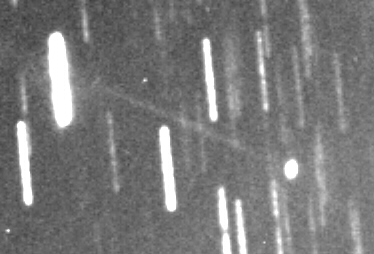
Comet 2004 TU12- The Asteroid that became a Comet for three days- this is day number two.
Image uploaded on: 2005-06-15 15:05:41
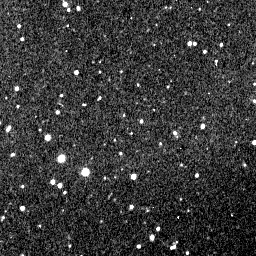
Gamma Ray Burst 050502a which has been determined to have occurred approximately 12 billion years ago. Dim star at 11 oclock from star in center of frame.
Image uploaded on: 2005-06-15 15:05:38